
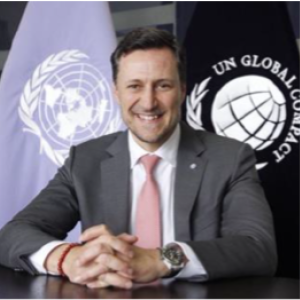
Message of the United Nations Resident Coordinator in the Philippines for the Inclusive Futures Forum
Manila, Philippines
Excellencies from the international community; officials of the government led by our partners from the National Council on Disability Affairs and the University of the Philippines; partners from the private sector and civil society, organizations of persons with disabilities, youth and representatives from the academe; colleagues from the United Nations; ladies and gentlemen:
It is my great pleasure to welcome you to the Inclusive Futures Forum, a gathering that is both a celebration and a call to action.
This event marks the culmination of UN Month 2026, commemorating the founding anniversary of the United Nations. Eighty-one years ago, on 24 October, the UN Charter came into force, establishing a shared commitment to peace, human rights, equality, and international cooperation. Filipinos share a special connection to this history through Carlos P. Romulo, who helped draft the Charter and whose legacy reflects the Philippines' longstanding commitment to multilateralism and international solidarity.
As Secretary-General António Guterres reminds us, United Nations Day celebrates not only an organization, but an idea: that humanity's future depends on our ability to work together to advance peace, development, and human rights.
For more than eight decades, the United Nations has sought to bring that idea to life by promoting dialogue, reducing poverty and hunger, advancing human rights, responding to humanitarian crises, championing gender equality, and bringing nations together to address shared challenges.
Today, that mission is more relevant than ever.
We face persistent conflict and inequality, alongside the growing impacts of climate change and the rapid rise of technologies such as artificial intelligence. In confronting these challenges, the UN Charter's values remain our guide: dialogue over division, cooperation over confrontation, and solidarity over fear.
These values have meaning only when they reach everyone, including persons with disabilities.
That is why this year's observance is especially important. For the first time, the United Nations and its partners in the Philippines have expanded the traditional UN Day celebration into a month-long commemoration that places disability inclusion at its center.
The theme, "UNlimited Together," reflects a simple but powerful truth: inclusive societies benefit everyone.
The promise of the Sustainable Development Goals becomes more achievable when the rights, leadership, and contributions of persons with disabilities are fully recognized. By working together, we can remove the physical, social, institutional, and attitudinal barriers that prevent millions from fully participating in society.
This year's observance also coincides with another important milestone. In just a few weeks, we will mark the twentieth anniversary of the Convention on the Rights of Persons with Disabilities, or CRPD. The Philippines can take pride in being the first ASEAN country to ratify this landmark treaty.
The CRPD was a transformative moment in the global human rights movement. It affirmed that persons with disabilities are rights-holders entitled to the full enjoyment of all human rights and fundamental freedoms. It also recognized that disability is often created by societal barriers, including inaccessible infrastructure, discriminatory attitudes, exclusionary policies, and barriers to information.
Importantly, the Convention did not create new rights. Rather, it clarified what human rights require in practice: equality, accessibility, autonomy, participation, dignity, and freedom from discrimination.
Twenty years later, we have an opportunity to celebrate progress while renewing our commitment to full implementation.
As we celebrate UN Month and prepare to mark twenty years of the CRPD, we are reminded that inclusion is not a specialized agenda. It is central to sustainable development, human rights, resilience, and peace.
The Sustainable Development Goals cannot be achieved if persons with disabilities are left behind. Whether addressing poverty, education, employment, climate action, gender equality, health, or governance, disability inclusion must be part of the solution.
Governments bear primary responsibility for upholding rights, but lasting progress requires partnership among organizations of persons with disabilities, civil society, academia, local governments, development partners, and the private sector. Most importantly, it requires the meaningful participation and leadership of persons with disabilities themselves.
The discussions and recommendations emerging from this forum will help shape future programs and policy conversations on disability inclusion in the Philippines. We are honored by your presence and grateful for your contributions.
"UNlimited Together" captures both our aspiration and our responsibility. It reminds us that when barriers are removed, opportunities expand. When participation is universal, societies become stronger. And when the talents and leadership of persons with disabilities are fully recognized, everyone benefits.
As we reflect on the vision of the UN Charter and the achievements of the CRPD, let us recommit to building a future where every person can participate, contribute, and thrive.
A future where no one is left behind.
A future that is truly unlimited, together.



Speech by
Goals we are supporting through this initiative

