
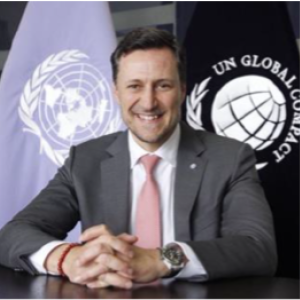
Message of the United Nations Resident Coordinator in the Philippines at the 13TH AAPTC AGM and Workshop - Closing Ceremony
Manila, Philippines
Distinguished delegates, colleagues, ladies and gentlemen,
It is a pleasure to join you as we close this 13th Annual General Meeting of the Association of Asia-Pacific Peace Operations Training Centers.
Let me begin by congratulating the Armed Forces of the Philippines for hosting this important gathering, and Bangladesh for its leadership of the Association. I also congratulate the Philippines as it assumes the chairmanship.
We meet at a particularly challenging time for international peace and security.
Conflicts are becoming more complex, more fragmented and increasingly shaped by new technologies, misinformation and rapidly changing security environments.
At the same time, the United Nations faces growing expectations to deliver results, often with fewer resources.
This makes the theme of your meeting — Technology, Information and Influence: Preparing Peacekeepers for Modern Conflict Zones in a Resource-Constrained Environment — particularly relevant.
As we conclude, I would like to leave you with three reflections.
First, peacekeeping must continue to adapt.
The peacekeepers of tomorrow will operate in environments very different from those of the past. Artificial intelligence, drones, digital surveillance and disinformation are changing the nature of conflict.
Training must anticipate these changes, not simply react to them. We need peacekeepers who are technologically prepared, operationally agile and equipped to make sound decisions in complex environments.
Second, technology must never replace the human dimension of peacekeeping.
At its heart, peacekeeping is about people: protecting civilians, building trust, engaging communities and creating space for political solutions.
Technology can improve our capabilities, but trust, judgment, cultural understanding and respect for human rights will remain indispensable.
A successful peacekeeper is not only someone who can respond to threats, but someone who can help prevent violence and build confidence among communities.
Third, partnership is our greatest force multiplier.
No country, training institution or international organization can address these challenges alone.
The strength of this Association lies precisely in its ability to connect experiences, share knowledge and turn lessons learned into better preparation for the field.
And in a resource-constrained environment, cooperation is not simply desirable. It is essential.
Colleagues,
As the United Nations continues to reflect on the future of peace operations, including through the UN80 reform process, your contribution will be critical.
Peacekeeping remains one of the most visible expressions of international solidarity. It is also a reminder that peace requires not only political commitments, but people willing and prepared to serve, often under extremely difficult circumstances.
My hope is that the exchanges here in Manila will translate into concrete improvements in training, stronger regional partnerships and, ultimately, safer and more effective peace operations.
Peacekeeping begins long before a peacekeeper is deployed. It begins in the quality of the training, the values we instill and the partnerships we build.
Thank you for your dedication to that mission, and for your continued commitment to the ideals of the United Nations.
Maraming salamat, and I wish you all a safe journey home.



Speech by
Goals we are supporting through this initiative
