Going beyond Yolanda: Revolutionizing Emergency Response through Family Food Packs
----

The United Nations World Food Programme has supported the Government of the Philippines in strengthening its logistics capacity through the establishment of National Resource Operation Centers, enabling the mechanized mass packing and prepositioning of family food packs for emergencies.
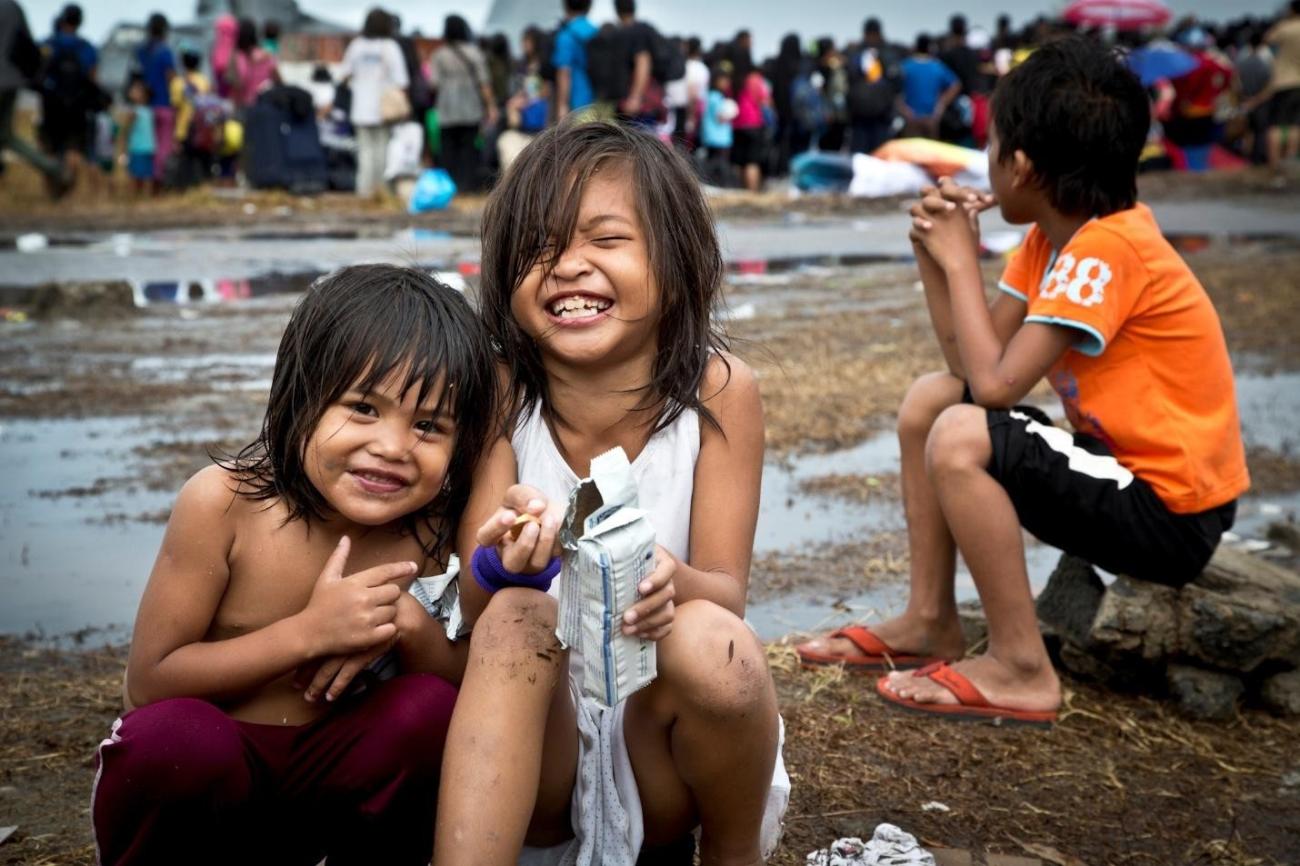
In November 2013, the Philippines suffered from what was then the strongest typhoon in recorded history. Super typhoon Yolanda (international name Haiyan) left a trail of destruction over the central islands of the Philippines, leaving over 6,300 dead and US$2.2 billion in damages. The devastation overwhelmed national response capacities and triggered an unprecedented Level 3 international humanitarian response —the highest level, reserved only for the most severe emergencies. It is the Philippines’ deadliest and most expensive natural disaster.
“We landed in a completely devastated airport and witnessed a tsunami-like impact. We saw many dead bodies - it was psychologically stressful,” said Dipayan Bhattacharyya, former Head of Programme, now Deputy Country Director for the World Food Programme (WFP) Philippines. “The priority was how to figure out how to provide food assistance because it was clear that bringing food from outside would be logistically challenging.”
Yolanda: Immediate Aftermath
WFP was on the ground the morning after the storm, leading the joint Government-United Nations multi-cluster initial rapid assessment that highlighted the urgent need for food, logistics, and emergency telecommunications assistance. Emergency response clusters were activated, with WFP taking the lead of the Food Security and Agriculture, Logistics, and Emergency Telecommunications clusters.
In response, emergency food rations were swiftly distributed, with WFP partnering with the Department of Social Welfare and Development (DSWD) to enhance family packs with rice and vital nutrition items. Approximately 530,000 people across 61 municipalities received unconditional cash assistance to address their urgent needs. Vulnerable mothers and children at risk of malnutrition were given ready-to-use supplementary food to ensure no one was left behind.
“The scale and enormity were beyond anyone’s comprehension. But it also bore witness to good relations and amazing donor response - everyone really worked together to support the families affected,” said Bhattacharyya.
The WFP-managed UN Humanitarian Air Service operated across 20 locations for 82 partners, transporting responders, medical evacuations, and cargo. Emergency telecoms were set up in 33 locations across 11 towns, supporting over 6,500 humanitarian workers. The Logistics Cluster moved over 60,000 m3 of cargo by road, sea and air.
Learning from the Storm: Disaster Response Centers
After Yolanda, it became clear that improving the Philippines’ logistics capacity is crucial for dealing with future emergencies. The Government and WFP agreed to strengthen the national capability to deliver relief goods to vulnerable, disaster-affected areas. One key component is the family food pack, which serves as the main unit of food assistance during large-scale emergencies, helping ensure that affected families can meet their essential food needs. Each pack contains enough supplies to feed a family of five for three days.
By July 2014, DSWD and WFP aimed to expand and organize the Department’s capacity for the timely and efficient production of family food packs. In 2015, with support from the governments of Australia, the Republic of Korea, and the United Kingdom, WFP helped DSWD set up a mechanized packing system at its National Resource Operations Center (NROC) in Pasay City. Additionally, WFP provided US$2.3 million in post-Yolanda funding for the mechanization system, which includes automatic case erectors, sealers, and bagging machines. Additionally, the Government set up the Visayas Disaster Resource Center in Mandaue City with WFP’s support.
Mechanization completely revolutionized the family food pack system. It enabled the NROC to produce up to 18,000 family food packs in an 8-hour shift (43 percent increase in production). In 2024, NROC produced a record 9.85 million packs.
Transporting these packs, along with non-food relief items like hygiene and shelter kits, requires the use of multiple disaster response centers capable of efficient procurement, assembly, storage, and delivery.
“We have worked closely with WFP to enhance our capacity at DSWD in areas such as disaster preparedness, logistics and supply chain management. WFP tailors its expertise to align with the requirements of DSWD,” said Irish Flor Yarangon, DSWD’s National Resource and Logistics Management Bureau Chief Administrative Officer. “This is seen when we mobilize food and non-food items in hard-to-reach areas, utilizing a flexible mode of transport.”

The increase in family food pack production allowed the Government to stockpile and pre-position packs nationwide, reducing delivery times during and after disasters. DSWD was able to preposition 360,445 family food packs in anticipation of Typhoon Ompong, which devastated the northern provinces in 2018. In 2021, WFP helped deliver 100,000 family food packs within a week of the aftermath of super typhoon Odette.
Beyond emergency response, mechanized packing has also been extended to social protection systems. During the COVID-19 pandemic, these packs were provided to families unable to work due to quarantines or other restrictions.
“At DSWD, we lead in the formulation, implementation and coordination of social welfare and development policies and programmes. WFP has significantly contributed to DSWD's mission in championing food security and building resilience among the most vulnerable population in the Philippines,” Yarangon said.
Empowering Government Responders
WFP has worked hand-in-hand with government partners to develop and deliver training modules on disaster response logistics, supply chain management, equipment operationalization, and innovative technology. These training sessions are part of WFP’s multi-partner, multi-year initiative: Preparedness and Response Excellence in the Philippines, which aims to enhance the Philippines’ disaster risk management capacities, to ensure timely, last-mile delivery of life-saving assistance during emergencies.

To strengthen logistics management, WFP signed a revised memorandum of understanding with DSWD. WFP remains dedicated to providing logistics support, including supplying items like generators, mobile storage units, and prefabricated offices, to ensure relief supplies reach affected families quickly and efficiently, helping address their food security in times of calamity.
Today, the disaster response centers are proudly self-sufficient, with DSWD taking care of all operational, maintenance, and upgrade needs. NROC is now called the Luzon Disaster Resource Center and has recently installed new mechanized packing systems that will further increase its FFP production, including three rice bagging machines for vacuum sealing. The Philippine Government is also eyeing additional disaster resource centers in Mindanao and Central Luzon.
“On top of supporting with equipment and transport, we are now heavily investing in people,” said Regis Chapman, Representative and Country Director of WFP Philippines. “Our goal is to strengthen the capacity of government responders and systems, enabling them to build on the outstanding work already being done across the Philippines.”



Written by

UN entities involved in this initiative
Goals we are supporting through this initiative