Three Decades for Peace: UNDP Accompanying the Bangsamoro Journey for Peace and Development

---
Transforming communities once defined by conflict, the United Nations Development Programme (UNDP) in the Philippines has been a steadfast partner in cultivating enduring peace in Mindanao.
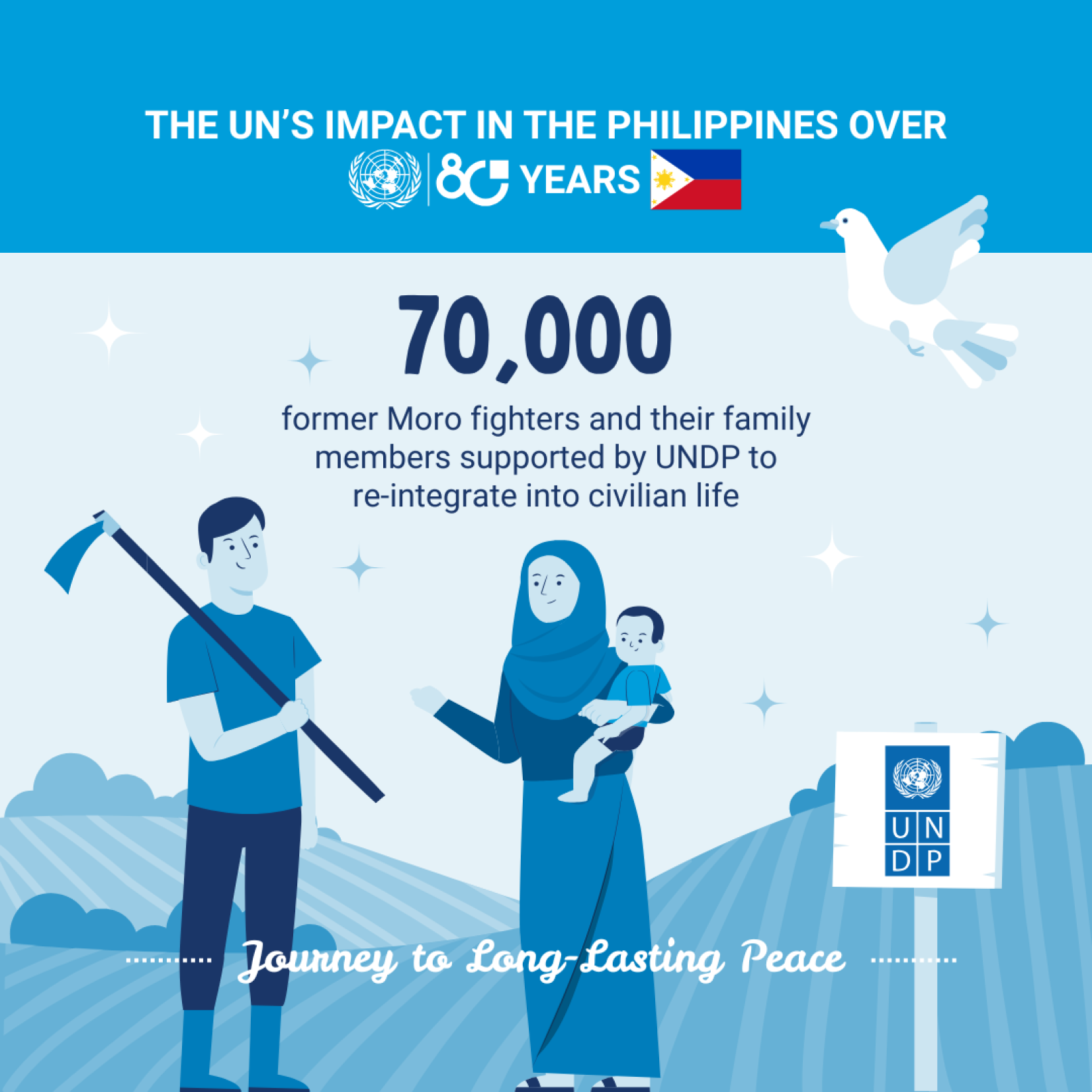
Back in 1997, UNDP took the lead in the United Nations Multi-Donor Programme (MDP) to support the realization of the 1996 Final Peace Agreement, a landmark accord between the Government of the Philippines and the Moro National Liberation Front (MNLF). The programme provided vital reintegration assistance to 70,000 MNLF former combatants and their family members.
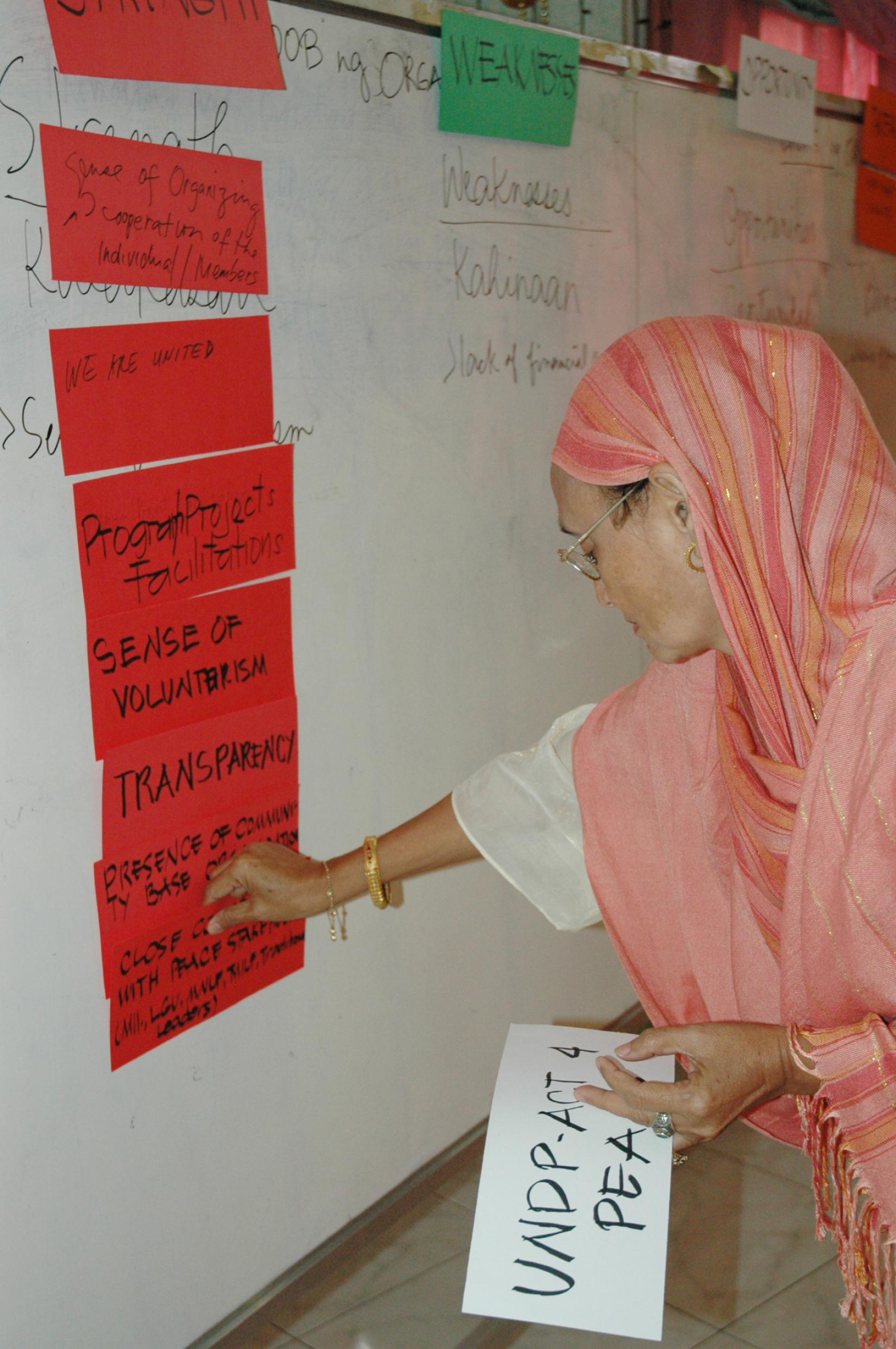
This initiative culminated in the Action for Conflict Transformation for Peace (ACT for Peace), a programme that transformed 278 conflict-affected communities, spread across 20 provinces in the Southern Philippines, into peace and development communities (PDC). PDCs participated in a series of capacity-building sessions, which encouraged them to be more proactive in the peace and development agenda.
Dausay ‘Thoss’ Daulug, the Founder and then-Executive Director of Maguindanaoan Development Foundation, one of the partner organizations at that time, recalls: “Even in the early stage of engagement with the PDCs, excitement was obvious, longing for a lasting peace. This was evident by their willingness to learn and actively participate in the community activities.”
At the community level, former combatants were educated on good governance, equipping them with skills to promote transparency and accountability, uphold the rule of law and protect human rights.
The journey to peace was far from smooth. Various spoilers threatened community-strengthening efforts at times. UNDP and its partners responded with adaptability to operate at scale across multiple programme areas, before, during, and after conflict crises.
Former MNLF Commander Makol Musa recalled a harrowing night in August 2008, when 400 people were caught in the crossfire between government troops and the Moro Islamic Liberation Front (MILF). The PDC Mapayag in Datu Anggal, Maguindanao provided immediate response and refuge to these internally displaced persons (IDPs). When people were evacuating, they spotted a ‘PDC’ sign from the highway, and they immediately felt safe, Musa said: “The transformation of these PDCs from conflict zones to safe spaces for vulnerable groups who, like themselves, had once been displaced by violence was an achievement of a long-held aspiration.”
Several PDCs, like Mapayag, remained stable and became host communities for IDPs. These PDCs provided a venue for the reintegration of former combatants, transforming them into Peace and Development Advocates. They also helped other communities recover from violent conflict and pursue peace and development initiatives.
UNDP’s role in the BARMM transition
In 2014, the Comprehensive Agreement on the Bangsamoro (CAB) was signed, giving peace a renewed chance in the region.
While agreements were made toward transition into the Bangsamoro Autonomous Region in Muslim Mindanao (BARMM), UNDP supported the crafting of the Framework Agreement on the Bangsamoro and the subsequent CAB between the Government and MILF. UNDP supported MILF’s peace negotiating panel by facilitating negotiations, providing technical assistance, and promoting community engagement. This support extended to organizing the Insider Mediators in the creation and approval of the Bangsamoro Organic Law (BOL).
“UNDP provided platforms where the parties had the opportunity to discuss the unsettling issues at the main table where the parties can look eye to eye, and at the end of the day, they come to terms with one another,” said BARMM Parliament Deputy Speaker Atty. Omar Yasser Sema of the Bangsamoro Transition Authority (BTA).
More than 10 years later, UNDP's commitment to peace in Mindanao remains. “Our support is strategically focused on key areas, including the normalization process, socio-economic development commitments, the application of conflict-sensitive approaches, and critical capacity development,” said Winston Aylmer ‘Butch’ Camariñas, Head of the Cotabato Field Office of UNDP Philippines. “These pillars are essential for ensuring that the hard-won peace is not just an end of hostilities, but a foundation for lasting stability and equitable progress in Mindanao.”
Former combatants are now at the seat of governance. Women who fought in the struggle alongside men are now claiming their spaces at the table. War zones are transforming into economic and peace zones. We are witnessing a generation of youth witnessing socio-political transitions.
“Beyond retelling Mindanao’s peace and conflict history, this narrative highlights a win for the partnerships and alliances between diverse members in the community and UN organizations like the UNDP,” Camariñas said.



Written by

UN entities involved in this initiative
Goals we are supporting through this initiative